Getting shortlisted for a classroom position or a steady home tuition role comes down to how quickly you prove your capability on paper. Knowing how to make resume for teaching job vacancies requires shifting your focus from ordinary syllabus lists to actual classroom impact, verified credentials, and clear readability. Academic coordinators review stacks of applications each week, and they usually make their first decision within seconds.
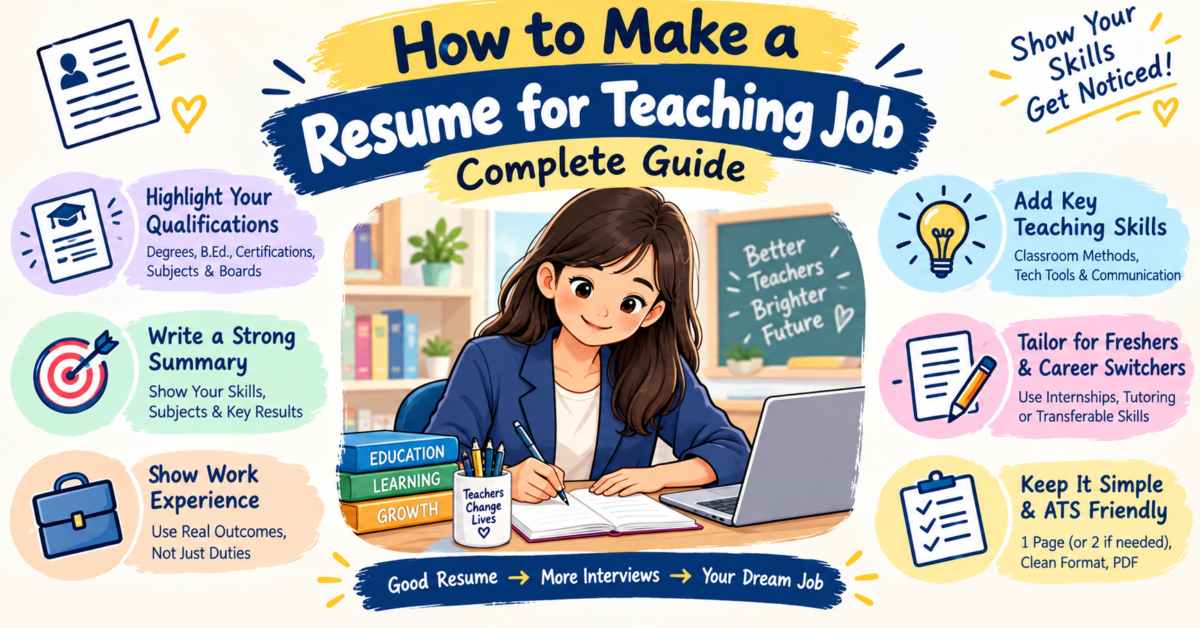
Quick Points to Remember
Layout First: Use a single-column setup without sidebars or decorative icons so administrative scanning software reads every entry cleanly.
Credentials at the Top: Put your degrees, B.Ed., and eligibility test scores right near your header.
Show Numbers: Highlight actual batch improvements, test results, or student growth instead of listing routine daily chores.
Length Rule: Keep your resume to one page when possible, but feel free to use two pages if you have enough relevant experience to justify it.
1. Put Contact Details and Qualifications at the Very Top
Principals and subject coordinators check your eligibility before reading anything else. If you bury your degrees or teacher training at the bottom, busy evaluators might overlook your qualifications during the initial screening.
Start with your full name, a professional email address(it should have your name), an active phone number, and your city or locality. You do not need to share your complete residential address(you are not inviting them home). If you keep an updated, professional LinkedIn profile, you can add the link here, though it is completely optional and never a requirement for teaching roles.
Place your highest degrees and teaching certificates directly beneath your contact details. State credentials such as B.Ed., D.El.Ed, M.Sc, CTET, or your State TET clearly. Include your core subjects, the target boards you handle (like CBSE, ICSE, or State Board), and completion dates. Keep the format of the dates consistent throughout.
2. Write a Simple, Focused Professional Summary
Skip generic openings like “Passionate teacher looking for an opportunity to inspire students”. Instead, give the school or parent an immediate reason to schedule a demo class with you. Tell them who you are, your skills, and what you are looking for. A good summary takes just two or three sentences to outline your core subjects, your target grade levels, and a solid academic win.
Example: CBSE-focused Mathematics and Science Teacher with 4 years of classroom experience helping middle-school batches bridge foundational learning gaps. Improved term-end test averages by 20% through weekly worksheets and individualized doubt-clearing sessions.
This summary introduces your subjects and results both, and tells what role would fit you given your expertise.
3. Describe Work History with Tangible Outcomes
Schools already know that teachers grade homework, take attendance, and explain textbook chapters. Your bullet points should show the difference your teaching made:
Routine statement: Taught Class 10 Science and administered regular exams.
Impact statement: Taught Class 10 Physics and Chemistry to a batch of 35 students, helping 82% achieve first-division scores on board exams.
Routine statement: Provided private home tuitions for junior school students.
Impact statement: Mentored 6 primary students in English and basic arithmetic across two academic sessions, bringing struggling readers up to expected grade-level reading fluency.
Routine statement: Communicated with parents regarding student progress.
Impact statement: Maintained monthly feedback reports for parents, resulting in consistent year-over-year student retention and steady academic progress.
Whenever you list previous school roles or tuition assignments, write both the month and the year (e.g., July 2022 – March 2025). Human resources teams inspect exact service windows to verify seniority and assign accurate pay scale steps.
4. Key Teaching Skills to Feature
Match your listed skills with the exact wording from the school vacancy or tutoring brief. Organize them into clear groups so they are quick to scan.
Instructional & Classroom Methods: You want to show you can plan terms around CBSE, ICSE, or state curriculum without falling behind. Mention differentiated instruction so reviewers know you can handle fast and slow learners in the same period.
Educational Technology & Practical Tools: Modern schools expect comfort with digital setups. Note your hands-on use of Google Classroom, Zoom, or Microsoft Teams for study materials. Mention interactive tools like smart boards, stylus pads, or quizzes, alongside basic spreadsheet tracking for marks and term attendance.
Communication & Classroom Demeanor: Teaching is interpersonal work. Highlight constructive parent collaboration during quarterly meetings, patience with tough concepts, and sensible time management that saves room for final revisions.
5. Tailoring for Freshers and Career Switchers
You do not need a decade of traditional classroom employment to write a strong resume.
If you are a fresh B. Ed graduate, treat your student teaching internship as real employment. Mention the grades you handled, the batch sizes, and any lessons you ran independently during full takeover periods. Long-term home tuition or coaching classes also count as authentic instructional experience. Mention how many students you tutored and how their marks progressed over time.
If you are entering teaching from another profession, translate your corporate or technical work into educational terms. Group training translates to instructional delivery, client reporting translates to stakeholder and parent communication, and project coordination translates to curriculum planning.
6. Formatting Rules and Document Length
District portals and school management systems often scan resumes before a department head reads them. Fancy designs often backfire during this step.
Keep your resume to one page when possible. Use two pages if you have enough relevant experience to justify it, especially if you have over seven to eight years of teaching, department head duties, or multiple board certifications. Avoid two-column layouts, graphics, skill-percentage bars, or photos, which can cause automated parsers to scramble your text. Finally, export your completed document as a clean PDF titled FullName_Teacher_Resume.pdf.
Knowing how to make a resume for teaching job vacancies comes down to presenting your credentials prominently, supporting your work with real student progress, and keeping your layout simple. When coordinators can verify your qualifications and classroom impact in a quick glance, you will hear back for demo sessions and interviews much faster.
Which subject and grade level are you preparing your resume for? Drop a comment below, and let us know what section of your resume you are polishing right now!