
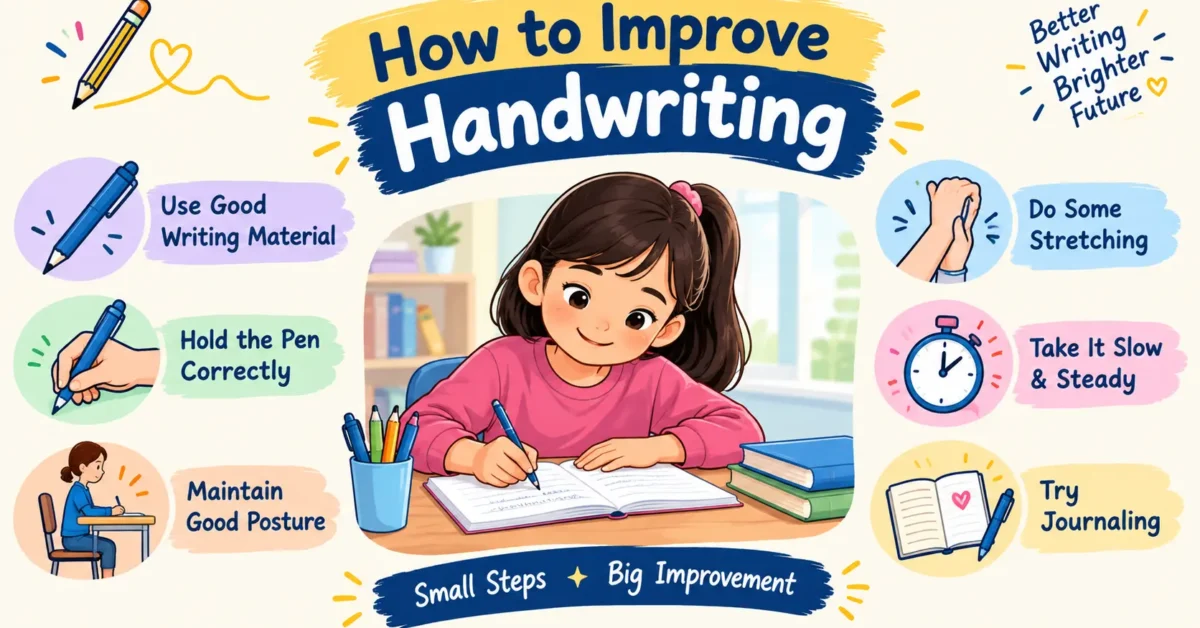
When it comes down to improving handwriting, even the sharpest mind stumbles. However, the good thing is that it takes quite a few considerations and daily practice to be better at it. This blog post constitutes everything you need to know about how to improve handwriting. So, let’s get started!
Everything else seems fine until you get a note in your child’s notebook to work on her handwriting. You have tried everything to make her penmanship improve; nothing seems to work, and now you’re wondering what could help!
The key lies in not putting consistent pressure on your child to work on it. Maybe she is doing her best but still can’t get it. This is when you need to consider the tips stated below in this blog. Handwriting is a skill built through habit, not talent, so with the right approach, almost every child can improve it over time. So, let’s get started to learn how to improve your handwriting!
Strategies on How To Improve Handwriting
Invest In Good-Quality Writing Material
Before anything else, think about what pen you’re choosing for your child. A good-quality, mechanical, ergonomic pen can do things which other types of pen simply can’t.
The pen should be easy to hold and must offer a nice grip so that it doesn’t slip from your child’s fingers in the first place. Also, the look must be considered, as students get excited to write nicely with a pen which looks nice to them. Even the weight and thickness of the pen matter, since a pen that feels too heavy or too thin can tire out your child’s hand before the writing practice is even done.
Hold the Pen Correctly
The pressure your muscles experience during writing also determines how your handwriting will come out. When you ask your child to hold their pen or pencil easily in a relaxed way, while keeping the grip, you will notice the difference.
The handwriting won’t look cramped; instead, the letters will come out beautifully, giving your child a boost in their confidence. A gentle tripod grip, where the pen rests between the thumb and index finger with support from the middle finger, usually works best.
Allow Your Arms To Move
There is one common mistake most students make while writing, which is that they keep their arms frozen while only allowing their hands to move. But that’s generally not the right approach.
You should tell them to unlock their arms while writing without locking their fingers. It will help you stay much more relaxed and eventually improve your handwriting. Writing from the shoulder rather than just the wrist also reduces tiredness during longer writing sessions.
Pay Attention To The Posture
Posture plays a crucial role in determining how your handwriting will be. Writing in a slouched or leaned position will naturally affect the handwriting. Hence, it is recommended to sit straight, keep your back relaxed, and place your feet perpendicular to the floor, so you sit straight while allowing the chair to support your back. The height of the desk and chair also matters, as a mismatch can quietly throw off your child’s writing posture without either of you noticing it.
Perform Some Stretching Exercises Before a Long Writing Session
You have been training your child hard to improve their handwriting. But know that every writing drill should start with some stretching exercises and should also have some in between if the session is long.
This not only improves their posture while writing but also keeps them from monotonous writing sessions. A few simple hand and wrist stretches can also prevent stiffness during longer writing sessions.
Keep it Slow and Steady
You cannot improve your kid’s handwriting from Day 1. You need to be consistent in your approach and ensure your child practises daily instead of practising for 5 hours in a day. Short daily sessions of ten to fifteen minutes tend to work far better than occasional long ones.
Don’t Break the Speed
There is a widely prevalent misconception that fast writing means good handwriting. But it is not always true.
To improve your handwriting, slow down your speed, so that it becomes a part of your muscle memory. If you’re just starting out with your child’s handwriting practice, try to improve their focus over speed. Once the basics are in place, speed tends to follow naturally on its own.
Journaling Is The Key
Journaling has therapeutic benefits we all know, but do you know it clearly helps to improve handwriting as well?
While it is an excellent way to bring your thoughts onto paper, focusing on your writing shall help you improve it as well. Encouraging your child to journal for just five to ten minutes a day about something simple, like their favourite part of the day, can make this practice feel enjoyable rather than a chore.
Bottom Line
Improving handwriting takes patience, and there is no single fix that works overnight. Small, consistent efforts, using good writing material, holding the pen correctly, sitting with the right posture, and practising daily, add up over time to make a real difference.
As a parent, try not to be too hard on your child if progress feels slow. Avoid comparing her handwriting to that of her classmates, as this can dent her confidence rather than build it. Encourage them gently, celebrate the small improvements, and keep the practice sessions light rather than stressful.
Remember that every child learns and improves at their own pace, so what works for one may take a little longer for another, and that is perfectly fine. With patience, the right tools, and regular practice, you will start noticing visible improvement in your child’s handwriting within a few weeks. So, pick up that pen, sit up straight, and start practising your way to better handwriting today!